QUEST / 04Professional Development
Resources and Opportunities

From ideasto execution.

Working with AI across UI, backend, and marketing—and taking that experience into CandleStack.

Read the reflection
Different parts of the same work

UI / Backend / Marketing

01 / Experience

Working with AI has changed how much I can take on. I've become better at prompting and learned to use tools I never thought I would be able to use. I'm making UI, working on backend tasks, developing marketing ideas, and moving between different parts of a project. At times, the pace feels closer to what I would expect from a team than from one person.

The experience
behind it.

My experience includes managing a creator campaign and working on product and design projects with AI. For the campaign, creators posted organic UGC on accounts they made for it. My work also involved deciding how the product should be explained and giving feedback when the drafts did not match what I wanted. I'm now applying that experience to CandleStack.

One example came from reviewing marketing scripts. The openings were becoming more distinct, but the product explanations still sounded similar. I asked for the explanation itself to carry the chosen style, using relevant examples of how someone introduces a product or develops an idea. That led to another round of research and revised script candidates. My contribution was identifying what was wrong and giving the revision a clearer direction.

02 / The activity

Putting names
to the skills.

For this assignment, I asked AI to help review the FSU Career Center's resources and connect them to examples from my work. Its Transferable Skills Checklist provides categories for describing that experience, including digital fluency, communication, problem solving, and leadership. Its resume guide also includes independent projects as experience and recommends showing skills through specific work descriptions.

Prompting is one part of that. In practice, I use it to describe a goal, bring in relevant references, and explain what needs to change. Learning unfamiliar tools connects to digital fluency. Reviewing drafts and noticing when the output does not match the goal connects to problem solving and communication. These descriptions make the work more specific than simply saying that I use AI.

01

Prompting with purpose

Giving AI a goal, relevant context, and specific feedback on what should change.

Communication
02

Learning unfamiliar tools

Working with AI across interfaces, backend tasks, and marketing.

Digital fluency
03

Evaluating the result

Recognizing when a draft or design misses the intended direction.

Problem solving
04

Directing the work

Setting creative direction, comparing versions, and deciding what to keep.

Leadership
05

Applying the experience

Taking previous marketing experience into work on CandleStack.

Career management

03 / Work in practice

The decisions
behind the output.

Examples of giving direction, reviewing a version, and deciding what should happen next.

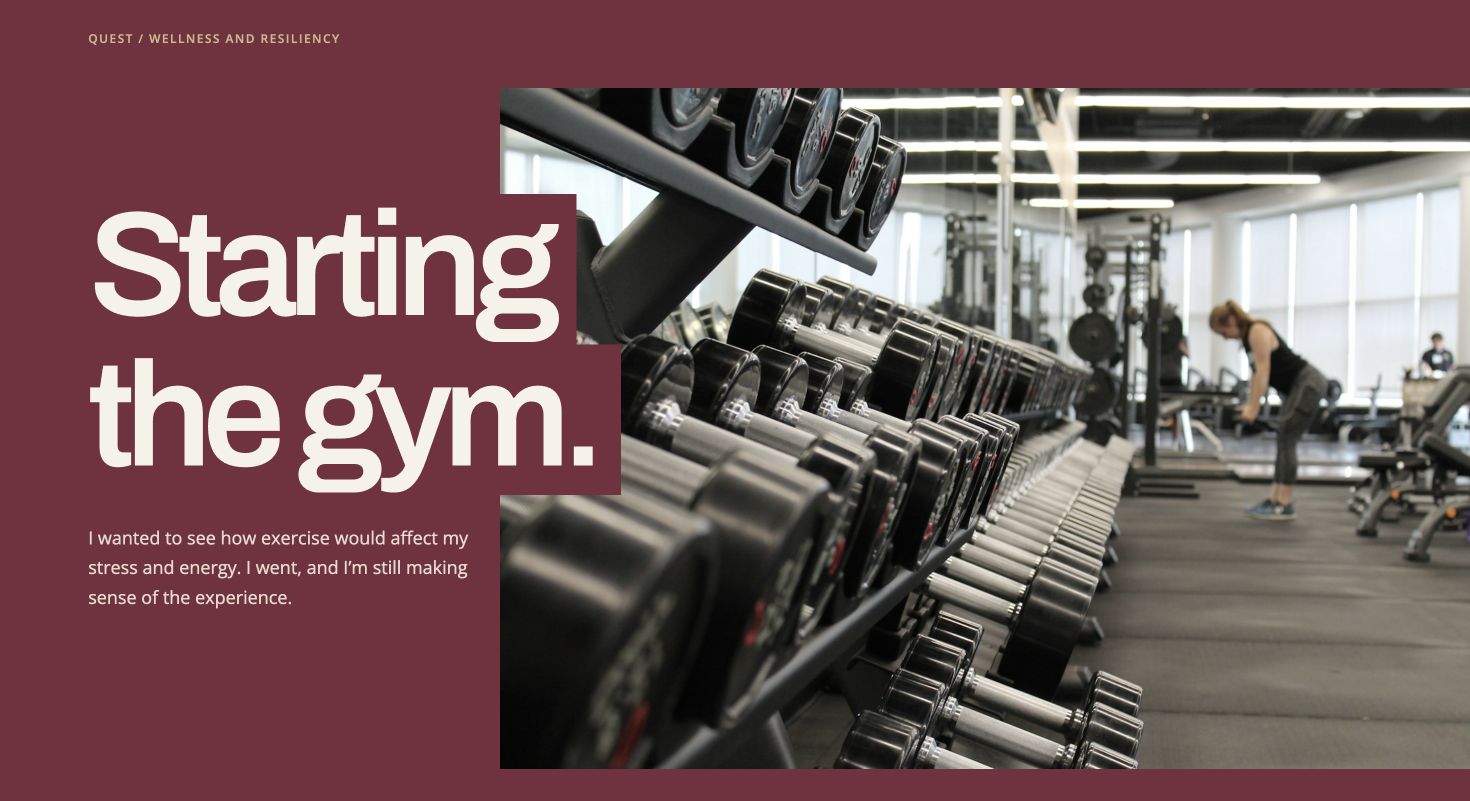
The approved QUEST gym reflection hero with its wide photograph and large heading.View full size
QUEST website / hero revisionOctober 2026

Product & design

Make the feedback specific.

The same process shows up in design. For a strategy graph, I asked for a layout that looked less regular, reviewed the updated version, and approved what should be preserved. On my QUEST website, I requested separate previews before combining changes. When the opening showed too much white space, I asked for that specific issue to be revised before approving it.

Working with AI

Direct. Review. Decide.

AI handled implementation work in those examples, while I supplied direction and reviewed the results. Those are different contributions within the same project. They give me concrete examples of how I communicate what I want and decide whether a version is ready to keep.

04 / Applying the experience

Taking it
into CandleStack.

The first CandleStack brief prepared with AI for this project focuses on someone who has watched a strategy video but is still unsure about its entry conditions. The planned explanation follows that uncertainty through the demonstration, instead of opening with a problem and switching to a list of features. It applies what I've learned about creative direction to a new CandleStack example. The brief is a first draft; reviewing it and checking the proposed demonstration are the next steps.

CandleStackCreative brief / 01

A clearer rule
from a saved video.

The viewer has watched a strategy explanation but is still unsure about exactly when an entry happens.

“As price crosses the level,
or after the candle closes?”

  1. Start with that specific uncertainty in the source video.
  2. Review the extracted rule against the explanation.
  3. Show how the confirmed condition is represented on the chart.

Next step: review the brief and check the proposed demonstration.

05 / Reflection

More skills.
More to work with.

The biggest change I've noticed is being able to work across more areas and execute ideas much faster. Better prompting and access to unfamiliar tools have expanded what I feel able to attempt. The examples also give that experience a professional description: directing work, learning tools, evaluating alternatives, and communicating revisions.

The Career Center's resources offer a connection between work I do outside class and how I can present it as an FSU student. This approach could also help with coursework that involves explaining decisions, organizing a project, or presenting a result. For CandleStack, my next step is to keep applying those skills to the actual product and marketing work, beginning with reviewing the brief and deciding what to revise.

Prompting. Learning tools.
Putting ideas into practice.